Limescale & Hard Water
Limescale in an Electric Shower: How to Clean It and Prevent Damage
Limescale in an electric shower is one of the most common hard water headaches, and it shows up as a weakening spray, a handset that fires water at odd angles, and eventually a shower that runs hot and cold or cuts out. Because an electric shower heats the water itself, the scale builds up in two places: the head and hose you can clean yourself, and the heater unit on the wall, which you cannot. This guide explains how to safely descale the parts you can reach, how to tell when the unit itself is scaling up, and what actually prevents the damage in a hard water area.
Why electric showers scale up faster
An electric shower heats cold water on demand as it passes through a small heater tank. Heating hard water is exactly what drives limescale out of solution, so the inside of the unit and the nozzles on the handset scale up faster than a mixer shower fed from a hot tank. The hotter the water and the harder your supply, the quicker it happens. If you are not sure how hard your water is, our guide to testing water hardness at home shows the simple checks.
Descaling the head and hose: what you can do safely
The handset and hose are the easy, safe part. You can treat these exactly as you would any shower head.
- Unscrew the handset from the hose if it comes off. Take out any rubber washer and set it aside.
- Soak it in distilled white vinegar or a citric acid solution for around 30 minutes to an hour. For citric acid, dissolve a couple of tablespoons in warm (not boiling) water. Do not use boiling water, which can warp plastic handset parts.
- Scrub the nozzles with an old toothbrush to shift softened scale, then rinse thoroughly.
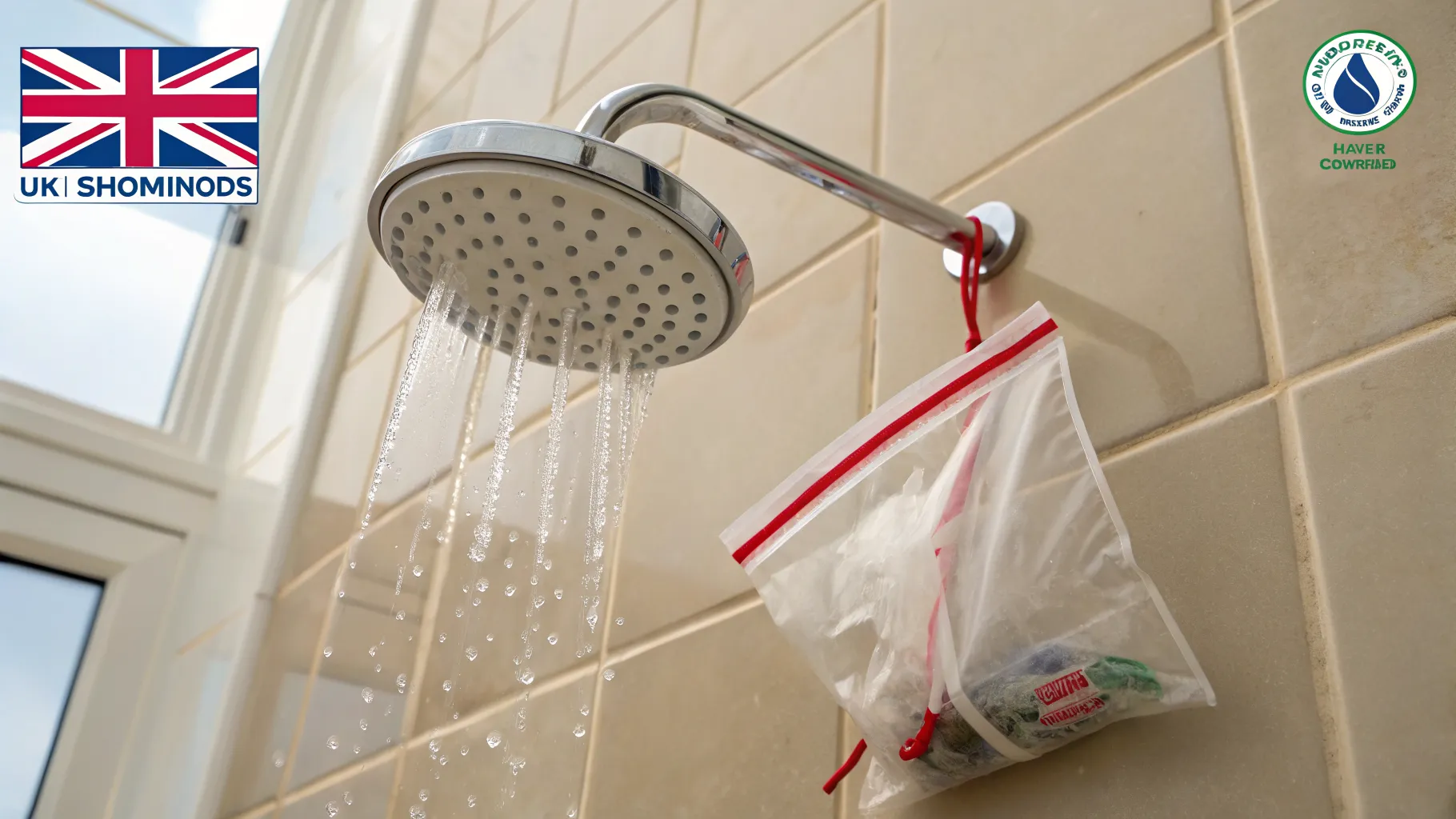
- For a fixed handset that will not unscrew, tie a bag of vinegar around it so the nozzles are submerged, and leave for the same time.
Rub any flexible rubber nozzles with a thumb to pop scale off. Our full guide to removing limescale from a shower head covers the finishes to be careful with, and the best limescale removers if you want a ready-made product.
One important caution: keep the water not too hot and never let plastic parts get near boiling. And crucially, this applies to the head and hose only, not the electric unit itself.
The bit you must not open: the shower unit
This is where an electric shower differs from every other kind, and where people get it dangerously wrong. The heater unit on the wall combines mains electricity and water. You should never open it, poke descaler into it, or try to flush it yourself. There is no safe DIY way to descale the inside of an electric shower unit.
Signs the unit itself is scaling up internally include:
- The temperature swinging hot and cold during a shower.
- Reduced flow even after you have descaled the handset and hose.
- The shower cutting out, or the thermal cut-out tripping repeatedly.
- A knocking or kettling noise from the unit.
If you see these, the heater tank inside is furring up. That is a job for a qualified electrician or plumber, and depending on the age of the shower the fix is often replacing the heater tank or the whole unit rather than cleaning it. Manufacturers such as Mira and Triton publish cleaning guidance for their showers and will tell you plainly that the internals are not user-serviceable.
How to stop it happening
In a hard water area, cleaning the handset is a losing battle unless you tackle the cause. Practical prevention:
- Descale the handset regularly, about once a month, rather than waiting for the spray to clog.
- Run the shower on cold for a few seconds at the end of use where practical, so less hot, scale-forming water sits in the head.
- Wipe the handset dry occasionally to stop droplets drying into fresh scale.
- Treat the water itself. The only thing that stops scale forming inside the unit and across the whole house is softening the supply. A water softener removes the calcium and magnesium before the water ever reaches the shower, which protects the heater tank, the kettle and the boiler alike.
Softening is the difference between descaling a handset forever and the problem simply not returning. In the hardest parts of the country it is the single most effective fix for electric shower limescale.
When to replace rather than clean
If an older electric shower is cutting out, running erratically, or has visibly furred internals, replacing it is often cheaper and safer than repeated call-outs, especially as scale damage tends to recur. A new unit combined with treating the water gives you a clean start. Get an electrician to fit any replacement; an electric shower is a mains appliance on its own dedicated circuit and is not a DIY swap.
Frequently asked questions
How do you remove limescale from an electric shower? Descale the handset and hose by soaking them in distilled white vinegar or a citric acid solution for 30 minutes to an hour, then scrub the nozzles with a toothbrush and rinse. Never open or try to descale the electric unit itself, as it combines mains electricity and water. If the unit is scaling internally, that is a job for an electrician or plumber.
Can you descale the inside of an electric shower unit? No, not yourself. The heater unit on the wall is a mains appliance and must not be opened or flushed with descaler. If the internals are scaling up, shown by temperature swings, reduced flow or the shower cutting out, a qualified electrician or plumber should inspect it, and the fix is often replacing the heater tank or the whole unit.
Why does my electric shower keep going hot and cold? Fluctuating temperature is a classic sign of limescale building up inside the heater tank, common in hard water areas. Descaling the handset will not fix it because the problem is internal. Have the unit checked by a professional, and treat the water supply so scale stops forming inside it in the first place.
How often should you descale an electric shower head? About once a month in a hard water area, and more often if the spray clogs quickly. Regular descaling of the handset stops the nozzles blocking, but it does nothing for the inside of the unit, which is why treating the water is the only lasting solution.
Does a water softener stop electric shower limescale? Yes. A water softener removes the calcium and magnesium that form limescale before the water reaches the shower, so scale stops building up inside the unit and on the handset. It protects the whole house, including the kettle and boiler, and in hard water areas it is the most effective way to prevent electric shower limescale for good.