Limescale & Hard Water
How to Descale a Kettle: The Fastest Way to Remove Limescale
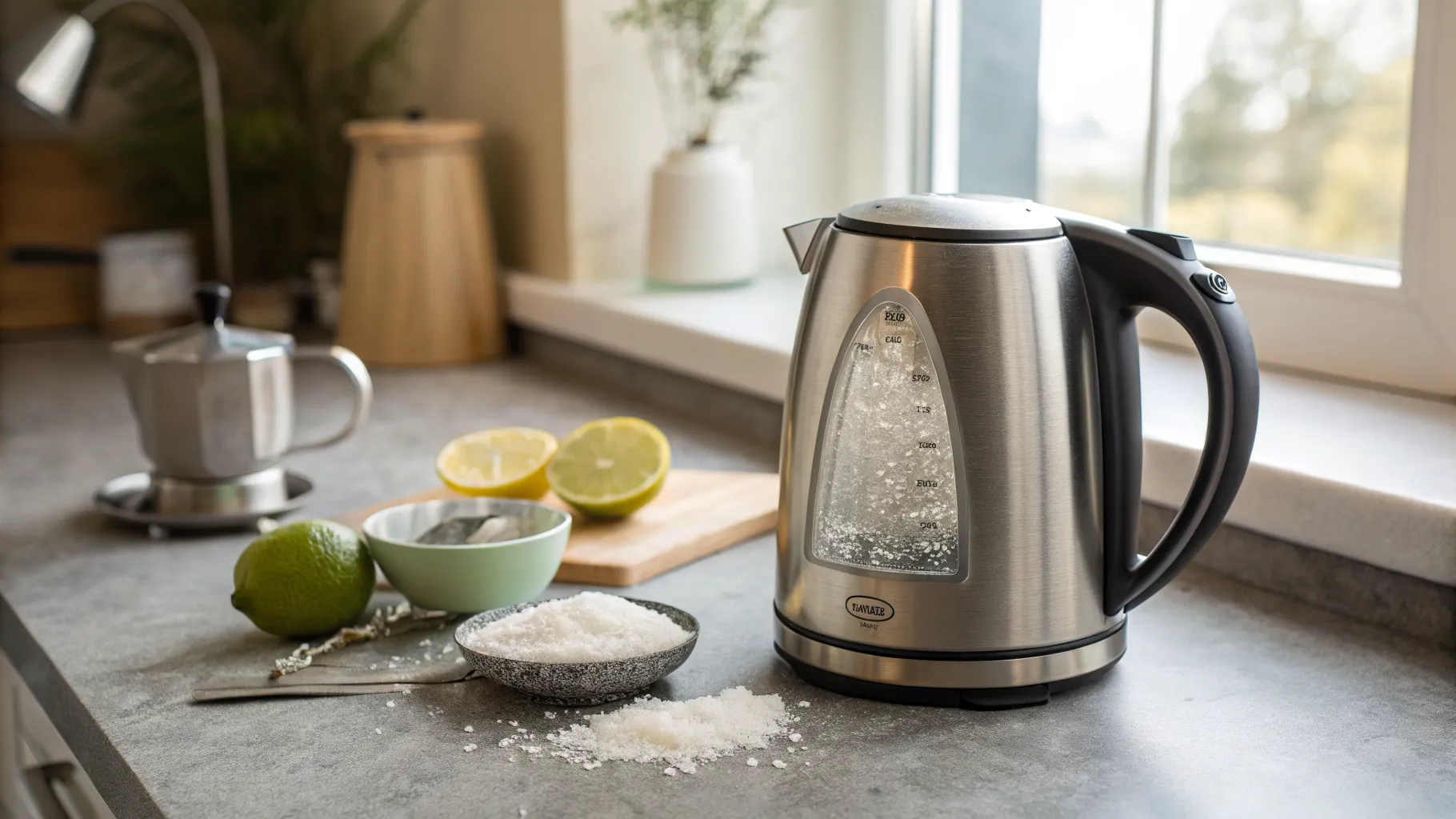
If you want to know how to descale a kettle quickly, the honest answer is that it takes about five minutes of effort and twenty minutes of waiting, using something you almost certainly already have in the cupboard. That chalky white crust on the element and the flakes floating in your tea are limescale, the calcium left behind when hard water boils. It is harmless to drink but it makes your kettle slower, noisier and less efficient, and left alone it shortens the kettle’s life. Here is the fastest, safest way to shift it, plus how often to bother.
The two methods that actually work
You have two reliable, cheap options: white vinegar or citric acid. Both are mild acids that dissolve limescale on contact. Citric acid is the tidier choice day to day because it works fast and leaves no lingering smell; white vinegar is the one most people already have. Skip novelty tricks and fancy gadgets, these two do the job.
Method 1: citric acid (the quick, low-smell option)
Citric acid is sold as a white powder in supermarkets and hardware shops and is the fastest, cleanest way to descale.
- Half-fill the kettle with water.
- Add one to two tablespoons of citric acid.
- Boil the kettle, then switch it off and leave it to sit for 15 to 20 minutes.
- Pour the solution away and rinse the inside thoroughly.
- Boil a full kettle of fresh water and tip it away before making your next drink.
That is usually enough to clear light to moderate scale in one go. For a heavy crust, repeat the soak.
Method 2: white vinegar (the cupboard classic)
- Fill the kettle with equal parts white vinegar and water, a simple 1:1 ratio, enough to cover the scale.
- Bring it to the boil, switch off, and leave it to soak for 20 to 30 minutes. For stubborn buildup you can leave it up to an hour without harming the kettle.
- Pour it out and rinse well.
- Do one full boil-and-discard with clean water, and a second if you can still smell vinegar.
One important detail: use plain white vinegar only, not malt, cider or wine vinegar, which are weaker and less effective. Standard white vinegar is around 5% acidity, which is fine for most jobs. Stronger “cleaning” or “spirit” vinegar at around 10% works roughly twice as fast on heavy scale.
A note on descaling tablets and commercial products
Shop-bought descaler sachets and tablets are simply pre-measured citric or similar acids, and they work perfectly well if you prefer the convenience. They are not more powerful than the methods above, just tidier to store. If you buy one, follow the packet instructions and check the current price against a bag of citric acid, which usually descales far more kettles for the money.
How often should you descale?
It depends entirely on your water. In a hard water area, aim to descale roughly once a month, or as soon as you see scale forming on the element. In a soft water area you may only need to do it a few times a year. Descaling regularly is worth the small effort: it keeps the kettle boiling efficiently, cuts energy use and extends its life. You can check how hard your supply is in our water hardness by area guide, and the appliance maker KitchenAid offers similar descaling advice for its own kettles.
Safety points worth knowing
- Never mix acids with bleach. Do not combine vinegar or citric acid with bleach or any bleach-containing cleaner, as this can release dangerous fumes.
- Rinse and boil off before drinking. Always do at least one boil-and-discard with clean water afterwards so no descaler taste reaches your cup.
- Limescale itself is safe. It is not harmful to drink, so there is no health emergency if you have swallowed a few flakes; the reason to descale is performance and longevity, not safety.
Limescale in the kettle is usually the first sign of hard water in the home, and the same mineral quietly builds up in your dishwasher, shower and washing machine too. If you are fighting it everywhere, see our guide to limescale in the dishwasher and the household advice on Which?. A longer-term fix for the whole house is a water softener, which stops scale forming in the first place.
Frequently asked questions
What is the fastest way to descale a kettle? Citric acid is the fastest low-smell method. Half-fill the kettle, add one to two tablespoons of citric acid, boil, then leave it for 15 to 20 minutes before rinsing and doing a boil-and-discard with clean water. It clears light to moderate limescale in a single soak.
Can I descale a kettle with white vinegar? Yes. Fill the kettle with equal parts white vinegar and water, boil, and leave it to soak for 20 to 30 minutes, up to an hour for heavy scale. Rinse well, then boil and discard clean water once or twice to remove the vinegar taste. Use plain white vinegar, not malt or cider.
How often should I descale my kettle? In a hard water area, descale roughly once a month or whenever you see scale on the element. In a soft water area, a few times a year is usually enough. Regular descaling keeps the kettle efficient, saves energy and helps it last longer.
Is limescale in a kettle bad for you? No. Limescale is calcium carbonate and is harmless to drink, so swallowing a few flakes will not hurt you. The reason to remove it is that it makes the kettle slower and less efficient and can shorten its life, not that it poses a health risk.
Is citric acid or vinegar better for descaling a kettle? Both work well. Citric acid tends to be quicker, leaves no strong smell and needs less rinsing, which makes it easier to live with. White vinegar is cheap and usually already in the cupboard. For everyday convenience many people prefer citric acid; for a one-off with what you have, vinegar is fine.
Can I use lemon juice to descale a kettle? Yes, lemon juice contains citric acid and will remove light limescale, but it is weaker and less consistent than powdered citric acid. It also leaves a pleasant smell. For anything more than a thin film, citric acid powder or white vinegar will do the job faster.