Limescale & Hard Water
How to Remove Limescale From Taps and Mixer Spouts
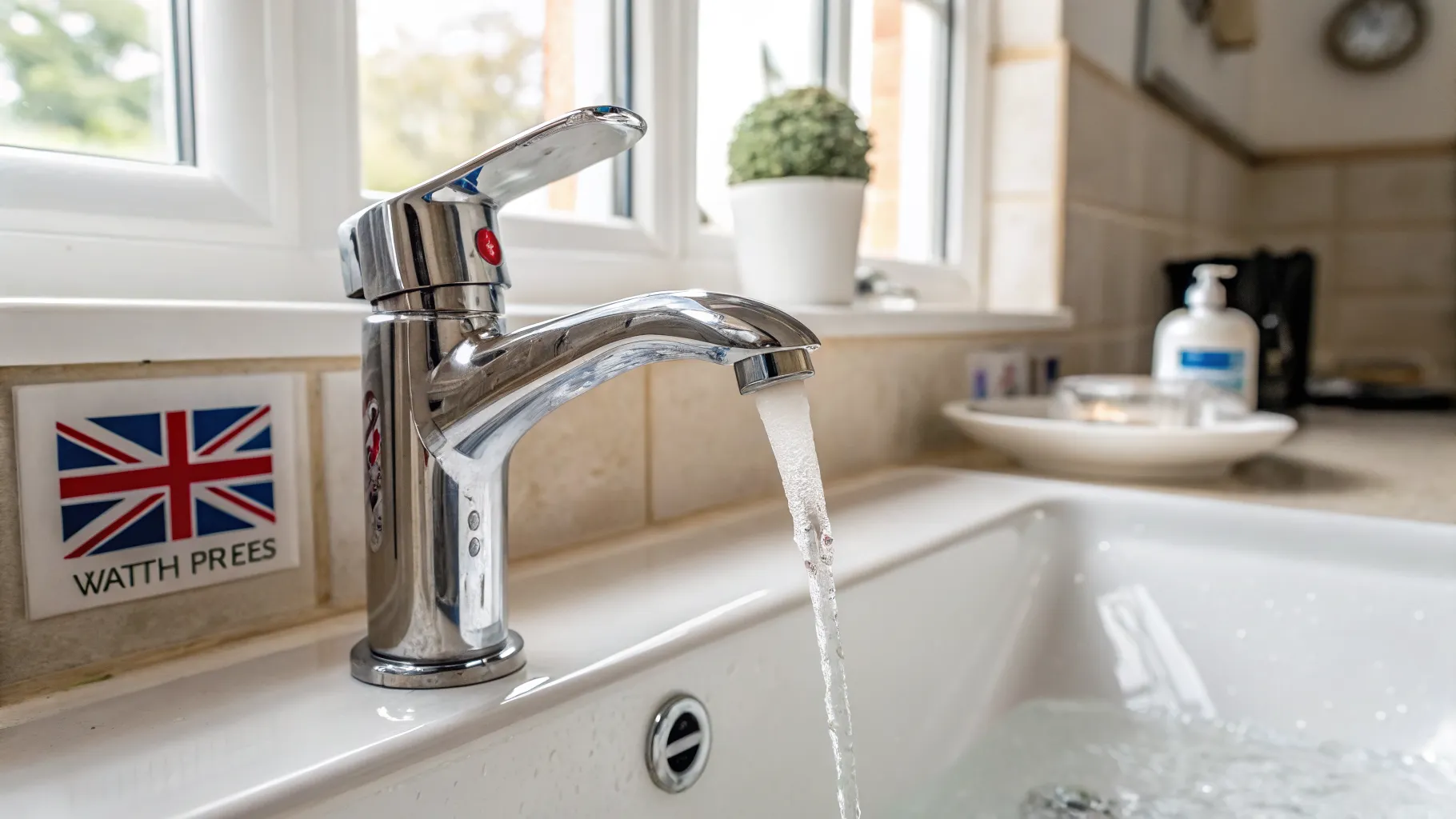
That crusty white ring at the base of your spout, the cloudy film on the chrome, the tap that suddenly sprays sideways instead of running straight: all of it is the same culprit, calcium carbonate left behind when hard water evaporates. The fix is not complicated, but doing it wrong can leave you with a tap that is permanently dull instead of merely scaled. The single most important thing to get right is the finish: what clears limescale off shiny chrome can strip the colour clean off matt black or brushed brass.
This guide walks through the safe method for each finish, how to clear a blocked aerator (the most common cause of a tap that has lost pressure), and exactly how long to leave acid on before it starts working against you.
First, identify your finish
This is the step most ranking guides skip, and it is the one that protects your taps.
| Finish | Acid descaler (vinegar, lemon, Viakal, etc.) | Safe approach |
|---|---|---|
| Chrome | Diluted only, briefly, then rinse hard | Equal parts white vinegar and warm water, rinse and dry straight after |
| Stainless steel | Diluted, briefly | As chrome; dry to avoid water spots |
| Matt black / brushed brass / gold / PVD | Avoid | Soapy water only, or a very brief diluted lemon wipe, never descaler sprays |
| Unlacquered brass | Avoid harsh acids | Gentle, dry thoroughly, expect a natural patina |
The rule for coloured and matt finishes comes straight from manufacturer aftercare. Tap Warehouse advises avoiding “steel wool, abrasive brushes and scouring pads” and “harsh chemical cleaners that contain ingredients such as hydrochloric and sulphuric acid,” and to “always clean with a soft sponge and soapy water.” For brushed brass and matt black they allow a 25/25 lemon juice and water solution, but it “isn’t left on to soak for more than a couple of minutes before rinsing.” You can read their full special-finish aftercare guidance for the detail.
If you have any doubt about your finish, treat it as delicate. Soapy water and patience will not damage anything; neat descaler on PVD gold might.
Removing limescale from chrome and stainless taps
Chrome is the most forgiving common finish, but it is not invincible. Undiluted vinegar used too often can strip the protective coating, and once acid has dulled chrome the lustre does not come back. So dilute, work quickly, and rinse.
For light film and water spots: wipe with a cloth dampened in equal parts warm water and white vinegar, then rinse with clean water and buff dry. Drying is what stops new spots forming.
For the stubborn ring at the base of the spout: the cloth-wrap method works because it holds the acid against the deposit instead of letting it run off.
- Soak a cloth or a few sheets of kitchen roll in a 50/50 white vinegar and warm water solution.
- Wrap it around the scaled area and secure it with an elastic band.
- Leave it for about an hour, squeezing it now and then to keep the area wet. For heavy buildup you can leave it longer, even overnight, but check chrome periodically.
- For the spout opening, half-fill a small sandwich bag with the solution, slip it over the spout, and tie it on so the tip sits in the liquid.
- Remove the cloth, wipe the softened scale away with a soft sponge, then rinse thoroughly and dry.
That final rinse is not optional. Residual acid keeps acting on the surface long after you have walked away, which is how people end up etching the very tap they were trying to clean.
A shop descaler does the same job faster if you prefer. Viakal and Cillit Bang are the two most commonly recommended bathroom limescale sprays in the UK; Cillit Bang’s limescale remover has been a Which? Best Buy in their limescale spray testing. With any spray, follow the label, keep it to a short dwell time, and rinse. The same finish rules apply: these are acid products, so keep them off matt black, brass and gold.
Fixing a tap that sprays or has lost pressure: the aerator
If your complaint is not how the tap looks but how it runs, weak flow, a split spray, or water shooting off at an angle, the problem is almost always the aerator. That is the small mesh insert screwed into the end of the spout, and limescale clogs it.
Kärcher’s UK guidance covers this well. Here is the sequence:
- Wrap a cloth around the aerator to protect it, then unscrew it by hand. If it is seized, use a pipe wrench over the cloth so the jaws never touch the metal directly.
- The aerator dismantles into three parts: a filter, a union nut and a gasket. Lay them out in order so reassembly is easy.
- Soak the parts in vinegar or vinegar essence for about 15 minutes until the limescale dissolves. As a citric-acid alternative, dissolve half a tablespoon of citric acid powder in 100 ml of warm water and submerge them.
- Rinse the parts, brush any loose scale out of the mesh with an old toothbrush, then reassemble and screw the aerator back on.
For a really stubborn aerator, wrap a vinegar-soaked cloth around the fitting and leave it overnight before trying again. The full method, including dealing with heavier calcification on the tap body, is on Kärcher’s descaling taps page.
A quick word on the popular trick of scraping the scale off with a 2p coin: it can work on a flat surface, but metal on metal risks fine scratches, especially on chrome. Soaking is slower but safer.
What not to do
- No scouring pads, steel wool or abrasive brushes. Even “gentle” scouring agents contain fine abrasive particles that can scratch chrome and aluminium.
- No neat descaler on coloured or matt finishes. Hydrochloric and sulphuric acid cleaners will dull or strip matt black, brass and gold.
- Do not leave acid on and forget about it. The damage comes from dwell time, not strength. Set a timer.
- Always rinse and dry. Leftover acid keeps etching; leftover water makes fresh spots.
How to stop it coming back
Cleaning treats the symptom. The reason scale keeps returning is the hardness of your water, the dissolved calcium and magnesium it carries. The harder your supply, the faster the ring rebuilds.
A few habits slow it down a lot. Keep a microfibre cloth by the basin and wipe the tap dry after the last use of the day, since scale forms as water evaporates, not while it sits. If your water is genuinely hard, a softener removes the minerals at source so taps, kettles and shower screens stay clear. You can check where you stand with our water hardness checker, and read more on hard water versus soft water to understand why the deposits form in the first place.
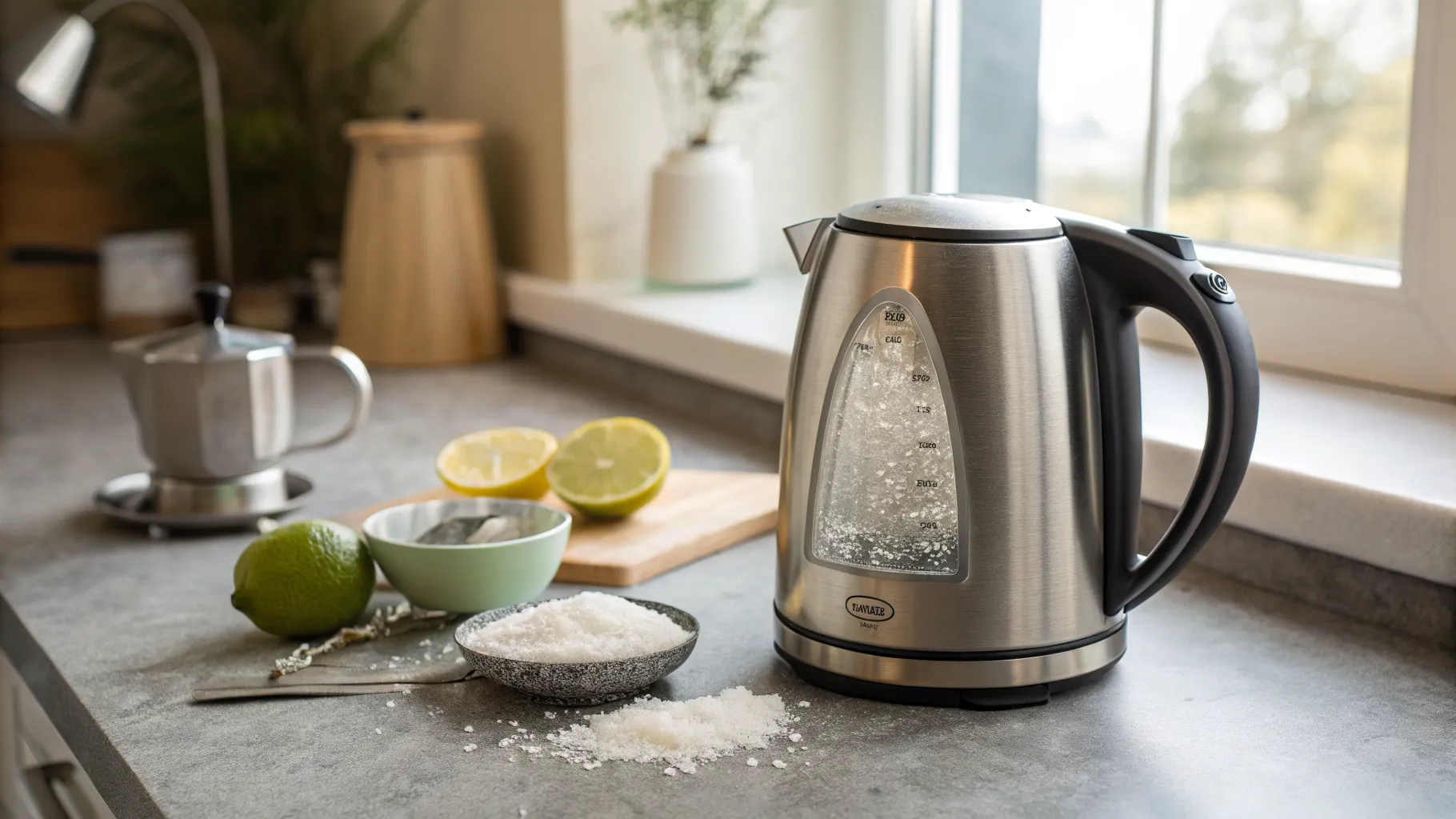
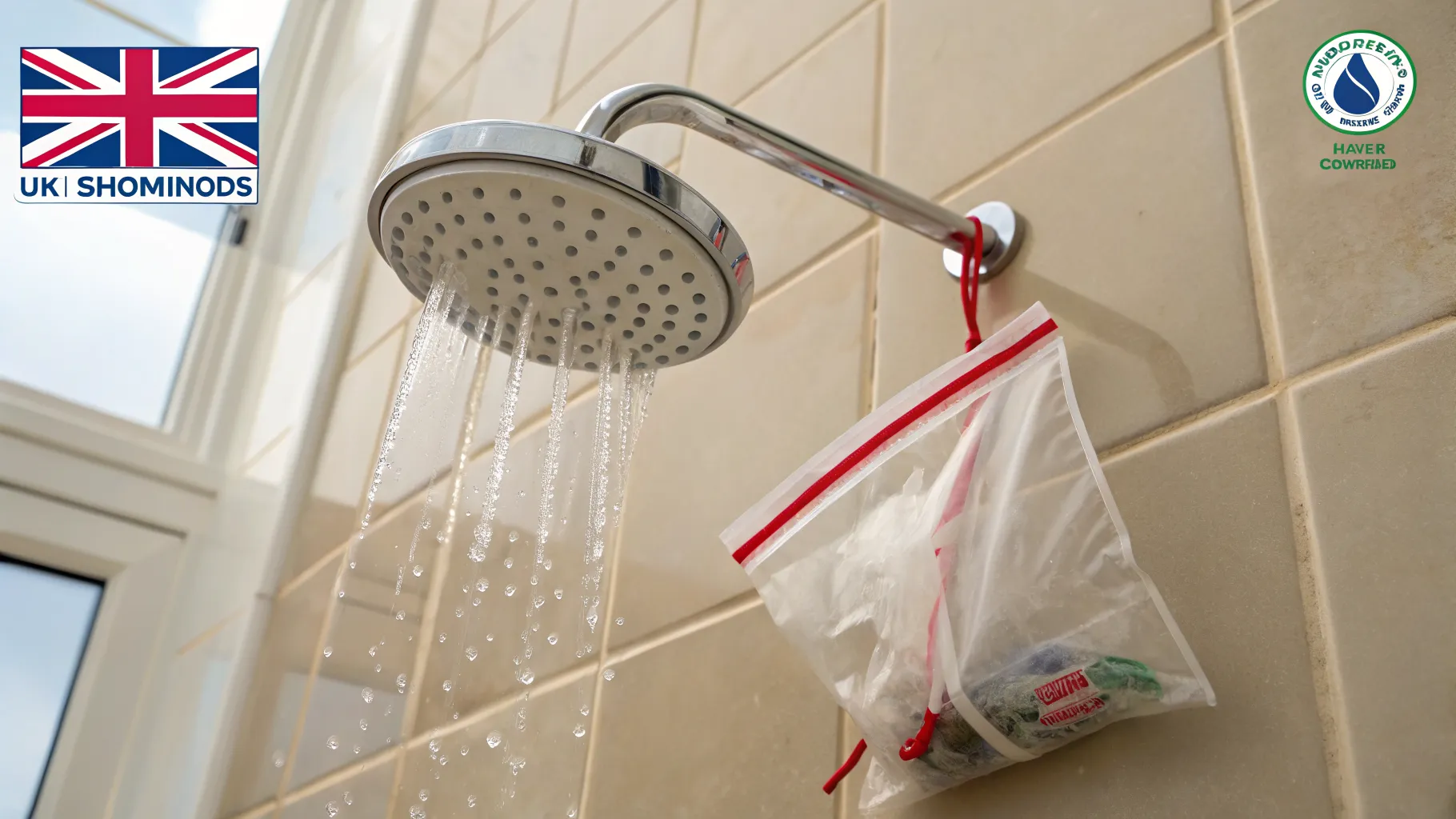
The same scale builds up everywhere water sits, so it is worth applying the same approach beyond the bathroom basin. We have separate guides for removing limescale from a shower head without taking it apart and descaling a kettle in a hard water area. If you are weighing up a longer-term fix, see whether a water softener clears limescale already in your pipes.
Frequently asked questions
Will white vinegar damage my taps? On chrome and stainless steel it is safe if you dilute it (equal parts vinegar and warm water), keep the contact time short, and rinse and dry afterwards. Used neat and often, vinegar can strip the protective coating on chrome and dull it. On matt black, brushed brass and gold, skip vinegar and use soapy water instead.
How do I remove the ring around the base of the spout that won’t budge? Wrap a cloth soaked in 50/50 vinegar and warm water around it, secure with an elastic band, and leave it about an hour, squeezing now and then to keep it wet. For heavy scale, leave it longer or overnight, then wipe with a soft sponge and rinse well.
My tap has lost pressure or sprays everywhere. How do I fix it? The aerator at the end of the spout is blocked. Unscrew it (wrap a cloth around it first), split it into its three parts, soak them in vinegar or a citric acid solution for around 15 minutes, brush out the mesh, then reassemble.
Can I use vinegar or descaler on matt black or brushed brass taps? No, not as a soak. Acids can permanently dull or strip these finishes. Clean them with a soft sponge and soapy water. A 25/25 lemon juice and water wipe left on for no more than a couple of minutes is the most these finishes should see, and never a descaler spray.
Is citric acid better than vinegar? It does much the same job and leaves no lingering vinegar smell. Dissolve half a tablespoon of citric acid powder in 100 ml of warm water and soak the part. The same finish rules apply: fine for chrome and stainless, not for matt or coloured taps.
How do I stop limescale coming back? Wipe taps dry after use so water cannot evaporate and leave deposits, and tackle the root cause if your water is hard. A water softener removes the calcium and magnesium that form scale, which keeps taps, kettles and screens clear for far longer between cleans.