Water Softeners
Water Softener Smells or Tastes Salty? Causes and Fixes
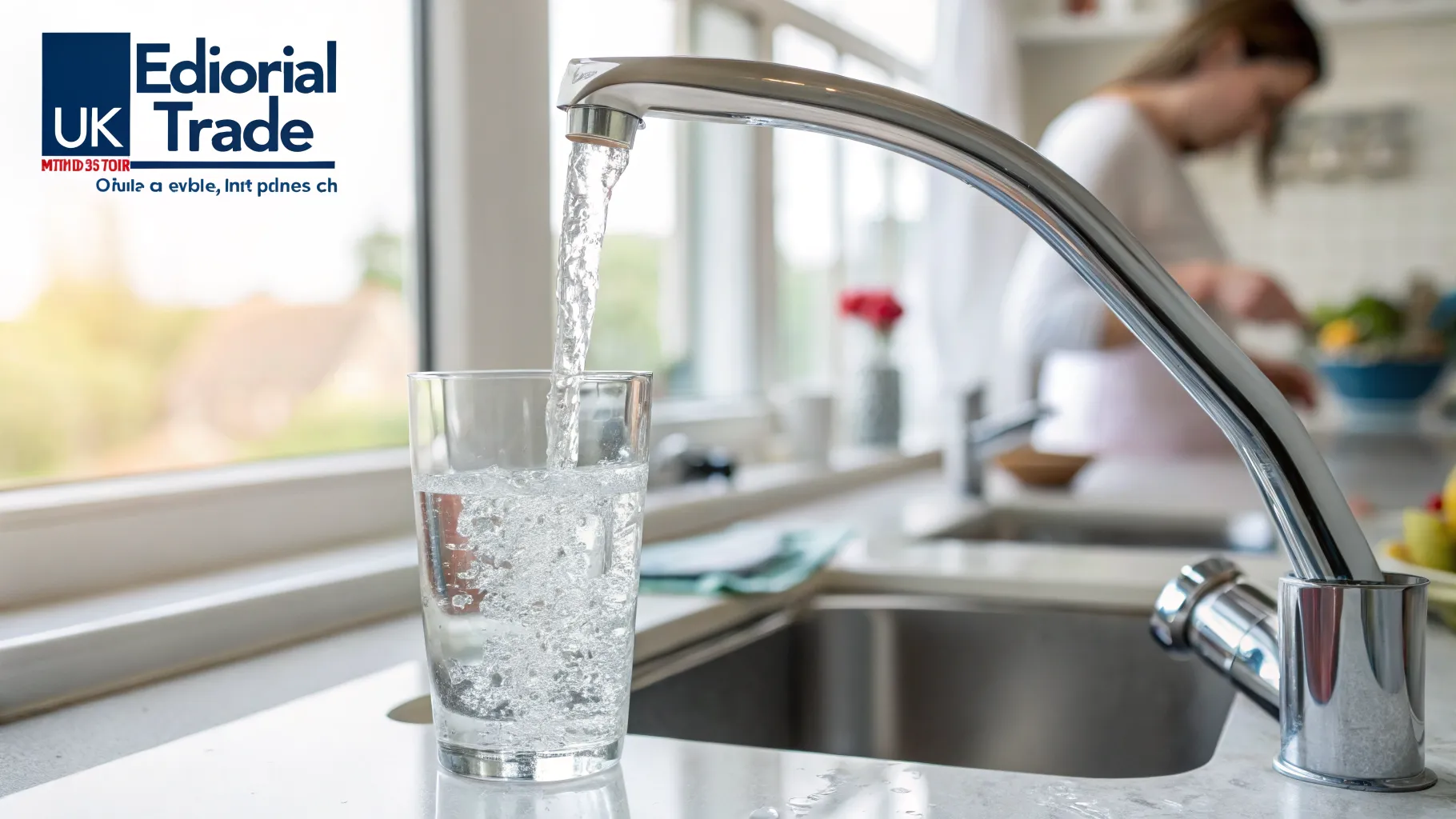
A water softener salty taste is alarming but almost never dangerous, and it usually points to one specific thing: brine that should have been rinsed out of the resin bed during regeneration has instead carried through to your taps. In most homes this is a short-lived rinse glitch that clears on its own. The real question for a UK household is which sort of problem you have, a benign rinse issue or a genuine fault that needs fixing, and whether the water you are drinking is safe in the meantime. This guide separates the two, walks through every cause in order of likelihood, and tells you exactly what to check.
First, the reassurance you actually came for
Two things to settle before any fixing.
First, a salty taste is not the same as the small, normal rise in sodium that softening always causes. Ion exchange swaps the calcium and magnesium that cause limescale for sodium, adding roughly 46 mg of sodium for every 100 mg/l of hardness removed (an industry figure quoted by UK softener firms). At those levels softened water sits below the taste threshold and does not taste salty. So if you can actually taste salt, that is a brine breakthrough, not the routine sodium content. We cover the routine sodium maths separately in can you drink softened water.
Second, in a correctly plumbed UK home your kitchen drinking tap should be on the unsoftened hard mains anyway. The Drinking Water Inspectorate (DWI) advises keeping an unsoftened supply to the kitchen tap for drinking and cooking, and the British Water Code of Practice recommends a separate hard tap wherever reasonably practicable. So before you worry about a salty taste in your drinking water, confirm the drinking tap was even plumbed to the softener in the first place. Many are not.
A quick test for whether your kitchen tap is soft or hard: wet your hands under the cold kitchen tap and rub in a little washing-up liquid or hand soap. Soft water lathers fast and feels slippery; hard mains water is slower to lather and the soap feels like it rinses away cleanly. If the kitchen cold tap lathers like the bathroom, it is on the softened supply, and a salty taste there is worth chasing. If it stays hard, your softener fault is only affecting bathing and appliance water, which is far less of a concern. Our guide to is my water hard or soft covers this test in more detail.
Salty only after regeneration, or salty all the time?
This single distinction tells you most of what you need to know.
| Pattern | Most likely cause | Severity |
|---|---|---|
| Salty for a short time right after regeneration, then clears | Incomplete rinse, or water drawn mid-cycle | Benign, often self-correcting |
| Salty most or all of the time | Clogged injector, restricted drain line, worn seals, over-brining | A real fault needing attention |
| Salty plus standing water sitting high in the salt tank | Drain restriction or stuck float | Needs fixing before it gets worse |
Softeners regenerate (flush the resin with brine, then rinse it clean) in the early hours, usually around 02:00. If salty water only appears first thing in the morning and is gone by mid-morning, you are dealing with a rinse that did not quite finish, which is the mildest case. If it never goes away, work through the fault causes below.
The causes, in order of likelihood
1. Incomplete rinse after regeneration (most common, most benign)
After the brine draw, the softener runs a slow rinse and a fast rinse to flush every trace of salt water out of the resin before returning to service. If those rinse stages are set too short, a little brine is left in the bed and comes through salty on the next draw.
What to do: run the cold tap for five to ten minutes to clear the standing brine. If it keeps happening after each regeneration, lengthen the backwash and fast-rinse times on the control valve in roughly two-minute steps until the taste stops. Your softener’s manual shows where these cycle times are set.
2. Using water during the regeneration cycle
If anyone draws water while the softener is mid-regeneration, brine can bypass straight into the supply and reach the taps salty. A late-night shower, a dishwasher set to run overnight, or a toilet refill during the cycle will all do it.
What to do: confirm the regeneration time is set for a genuine low-usage hour (around 02:00) and avoid using water during the cycle. After a power cut the clock often resets and the cycle can land in the daytime; our guide on how to reset a water softener covers fixing the time.
3. Clogged injector or venturi
The injector (also called the venturi) is a small plastic nozzle in the control valve. It creates the suction that draws brine from the salt tank and, just as importantly, drives the rinse that clears that brine out afterwards. Fine salt dust, sediment or iron deposits block its tiny hole, the rinse weakens, and salty water results.
What to do: with the unit in service mode (not mid-cycle), turn off the water and unplug it, then locate and remove the injector following your manual. Rinse it and clear the nozzle holes with a soft brush or a wooden toothpick. Never use a metal pin, as widening the hole ruins the calibration. Cleaning the injector once or twice a year prevents this returning.
4. Restricted, kinked or over-long drain line
The softener needs a strong, free-flowing drain during regeneration to flush the brine and waste away. A kink, a partial blockage, or a drain run that climbs too high or stretches too far (problems tend to appear beyond about 2.5 metres of lift or 6 metres of length) slows the cycle so the bed is never properly rinsed. The same restriction often leaves water standing high in the salt tank.
What to do: trace the drain line from the softener to where it discharges. Straighten any kinks, check it is not crushed behind the unit, and make sure the end is not blocked or submerged in a way that creates back pressure. Then run a manual regeneration and watch that waste water flows away freely.
5. Over-brining from settings or a faulty float
If the hardness is set far higher than your actual water, or the unit regenerates on a fixed timer rather than metering your usage, it can use more brine than the rinse is set to clear. A brine-tank float stuck high lets too much water into the tank, making weak but excessive brine that the rinse struggles to flush.
What to do: check the programmed hardness against your real figure (your water company publishes it by postcode, or see the DWI hardness guide). Lift the float in the brine well by hand; it should move freely. Clean the stem if scale is making it stick.
6. Worn seals, spacers or a stuck control valve
This is the more serious end. Inside the valve, worn seals and spacers or a sticking piston let brine bleed past into the service flow even between regenerations, so the water tastes salty more or less constantly. This is not a quick clean.
What to do: this points to a service or repair. Contact the manufacturer or a softener engineer, especially if the unit is more than ten years old, where a rebuild may not be worth it against a replacement.
7. Low incoming water pressure (less common in the UK)
A weak rinse needs adequate pressure behind it. US guidance often cites a working range of about 45 to 70 PSI (roughly 3 to 4.8 bar), with problems below around 30 PSI (about 2 bar). UK mains pressure is usually well within this, so it is rarely the cause here, but it is worth knowing if your home runs on a low-pressure private supply or a long, narrow service pipe.
What about a smell, not a taste?
A rotten-egg or sulphur smell is a different fault from a salty taste, though both come back to the softener.
The smell is hydrogen sulphide, produced by sulphur-reducing bacteria that colonise the resin bed and brine tank. The sodium-rich, often-stagnant environment inside a softener suits them, particularly if the unit sits unused for long stretches.
What to do: sanitise the resin tank using the manufacturer’s resin-bed cleaner, empty and scrub the brine tank, and refill with a high-purity salt. A clean every six to twelve months and an annual professional service keep it from returning. If the smell is on the hot water only and not the cold, that usually points to the immersion or hot-water cylinder rather than the softener.
The UK salt angle worth knowing
Salt quality feeds directly into regeneration and rinse problems. UK softeners run on either block salt (two blocks side by side) or tablet salt (a round tank with a lid), both made from Pure Dried Vacuum (PDV) salt. Block salt dissolves more evenly and resists two faults that disrupt brining: salt bridging (a hard crust that arches over an empty gap so the salt never meets the water) and mushing (sludge at the base that clogs the brine pickup). Harvey’s and Kinetico systems are built around block salt for this reason.
If your salty taste comes with erratic regeneration, low-grade or wrong-type salt may be part of the picture. Our block salt vs tablet salt comparison covers which suits your machine. If you want to stock up, you can check the price on Amazon UK for the salt type your softener specifies.
When to call an engineer
You can handle causes 1 to 5 yourself: they are rinse settings, cleaning and drain checks. Call a professional if the taste is constant and points to worn seals or a stuck valve (cause 6), if you find the tank cracked, or if a power cut and clock reset has not explained a daytime regeneration. If you are weighing repair against replacing an ageing unit, our best water softener UK comparison and water softener running cost UK breakdown will help you decide.
Frequently asked questions
Why does my softened water taste salty after it regenerates? Because the rinse stages did not fully flush the brine out of the resin bed, so a little salt water carried through. If it clears within five to ten minutes of running the tap and only happens just after regeneration, it is a benign rinse issue. If it lasts all day, check the injector, drain line and seals as covered above.
How long does the salty taste last, and how do I flush it out? A one-off rinse glitch usually clears after running the cold tap for five to ten minutes. If it keeps returning after every regeneration, lengthen the backwash and fast-rinse cycle times in roughly two-minute steps until it stops.
Is salty softened water safe to drink? A short burst of salty water from an incomplete rinse is not harmful for a healthy adult, though it is unpleasant. It should not be drunk by babies (for formula) or anyone on a medically prescribed low-sodium diet, who should use the unsoftened tap regardless. In a correctly plumbed UK home the kitchen drinking tap is on the hard mains anyway, per DWI advice.
Why is there standing water sitting in my brine tank? A few centimetres of brine at the base between cycles is normal. Water rising well above the salt usually means a restricted or kinked drain line or a stuck brine float, both of which can also cause a salty taste. Check the drain run and lift the float by hand to confirm it moves freely.
Why does my water softener smell of rotten eggs? That sulphur smell is hydrogen sulphide from sulphur-reducing bacteria living in the resin and brine tank. Sanitise the resin tank with the manufacturer’s cleaner, scrub the brine tank, switch to a high-purity salt, and service the unit every six to twelve months. A smell on the hot tap only usually means the hot-water cylinder, not the softener.
Should my kitchen tap be soft or hard, and how do I check? The DWI advises keeping the kitchen drinking tap on the unsoftened hard mains. To check yours, lather a little soap under the cold kitchen tap: fast, slippery lather means it is on softened water; slower lather means it is on hard mains. If your drinking tap is softened and tasting salty, that is worth chasing; if it is hard, the fault only affects bathing and appliance water.