Water Softeners
Water Softener vs Water Filter: What's the Difference?
Water softener vs water filter is the question people ask when they mean “how do I make my water better”, and the honest answer is that the two do almost unrelated jobs. A softener protects your house. A filter changes what goes in your mouth. They are not competing products and picking between them is usually the wrong framing, which is why a lot of UK homes in hard water areas end up with both, connected in a specific order for a specific reason.
The short version
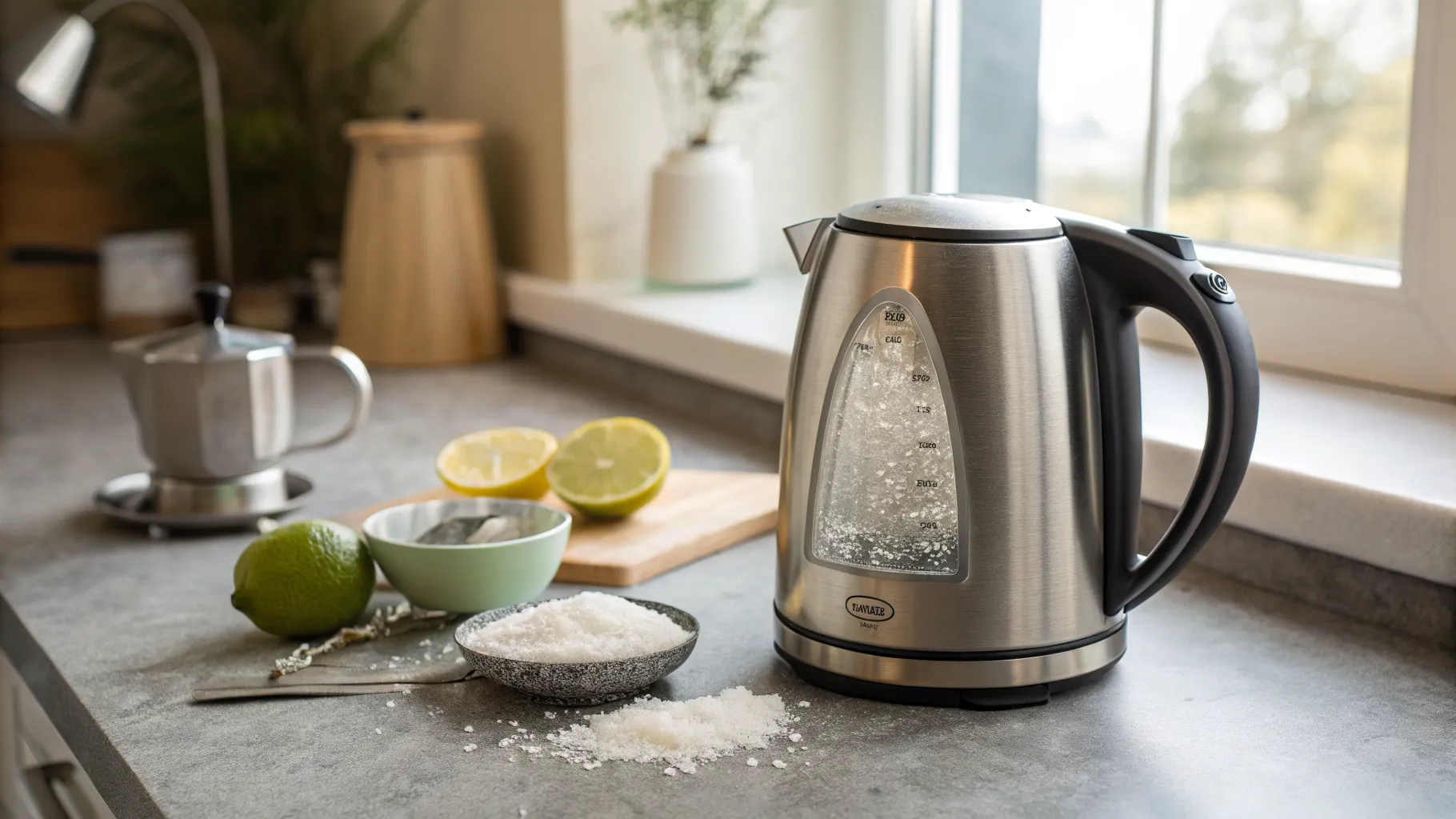
A water softener removes calcium and magnesium. That is it. Those minerals are not harmful to drink, but they are what deposits limescale in your boiler, your kettle, your shower head and your washing machine. A softener is plumbing protection.
A water filter removes contaminants and things that affect taste. Chlorine, sediment, heavy metals, pesticides, and depending on the technology, bacteria. A filter is about water quality at the point you drink it.
Ask which problem you have. Furred-up kettle, scummy shower, boiler efficiency dropping: softener. Water tastes of chlorine, worried about what is in it: filter. Both: both.
How each one works
Softeners use ion exchange. Hard water passes through a resin bed that swaps the calcium and magnesium ions for sodium ions. The hardness minerals stay on the resin, and the resin gets regenerated periodically by flushing it with brine, which is why a softener needs salt and a drain. That salt is not going into your water to make it salty; it is going in to clean the resin. If yours does taste salty, something is wrong, and our guide on a salty taste from a softener covers why.
Filters use several different technologies, and the word covers a lot of ground. Activated carbon adsorbs chlorine and improves taste. Reverse osmosis pushes water through a membrane and strips out almost everything, including dissolved minerals. UV kills bacteria. A jug filter, an under-sink cartridge and a reverse osmosis system are all “filters” and are not remotely equivalent. We compare them in reverse osmosis vs jug vs under-sink.
Note what follows from the mechanisms: a filter does not soften, and a softener does not purify. A carbon filter will not stop limescale, because dissolved calcium goes straight through it. A softener will not remove chlorine or improve safety, because it is only trading ions. Salespeople blur this. The physics does not.
The UK bit that decides your plumbing
This is the part that matters most and gets left out of most comparisons.
Softened water carries added sodium, in proportion to how hard your water was to begin with. UK drinking water regulations set a sodium limit of 200 mg/l at the tap. In a very hard water area, fully softened water can approach or exceed that.
So the standard, correct UK installation leaves the kitchen cold tap unsoftened and softens everything else. The Drinking Water Inspectorate is clear that where water is softened by base exchange, an unsoftened outlet should be provided for drinking, and that you should not soften the water to the kitchen tap used for drinking and cooking.
This is not bureaucratic caution. It matters specifically for two groups: people on medically restricted low-sodium diets, and premature babies, whose kidneys are poor at clearing sodium, which makes softened water a bad idea for making up formula.
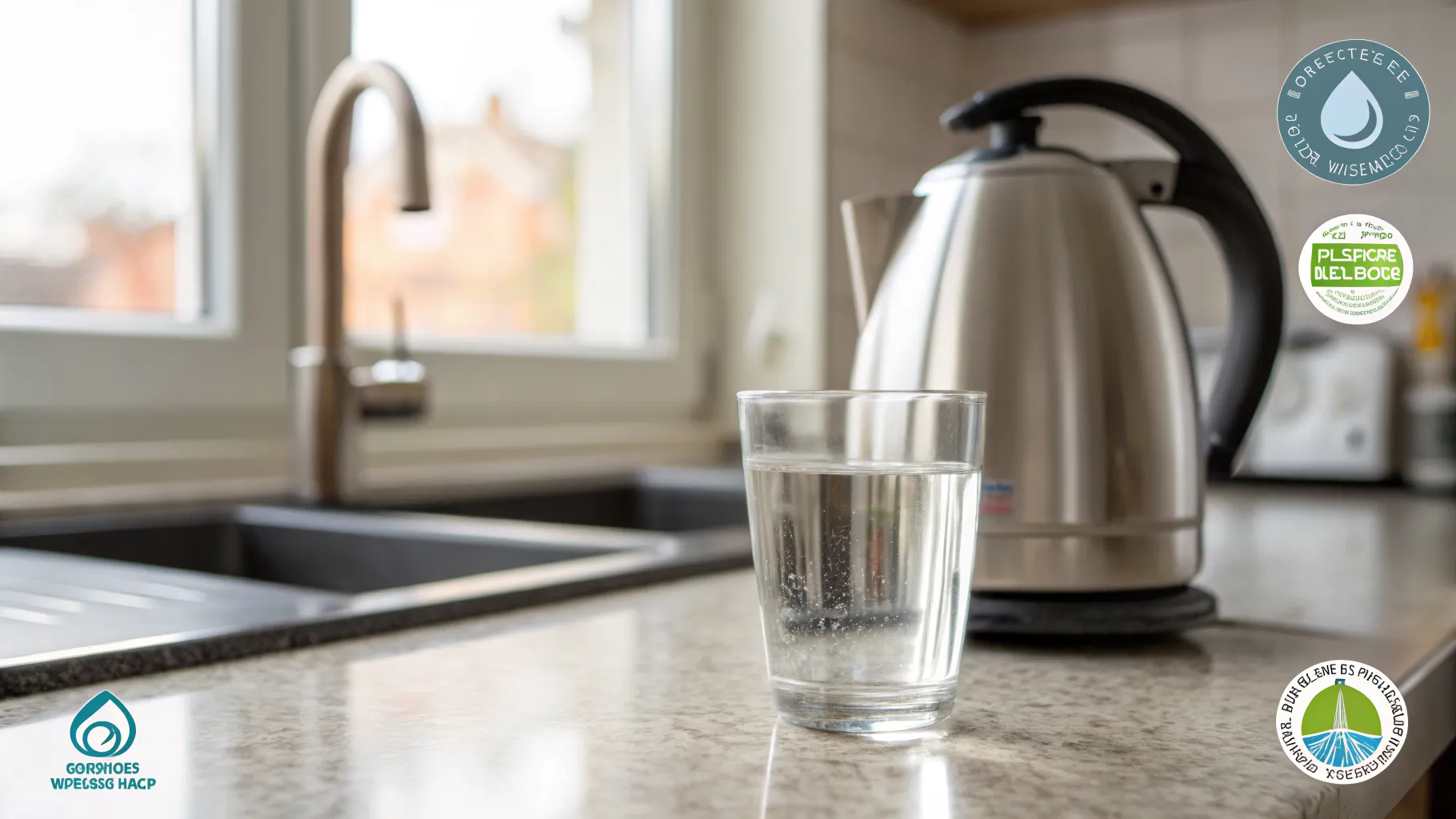
Now look at what that installation actually leaves you with. Your bathroom, boiler and appliances get soft water. Your drinking tap gets the original hard, unfiltered mains water, untouched. The softener has done nothing for what you drink.
That is why the two products are complementary rather than alternatives. The softener protects the house. If you also want better drinking water, the filter goes on that unsoftened kitchen tap. The softener has not solved that problem and was never going to.
Which do you actually need
Get a softener if: you are in a hard water area, you are descaling the kettle constantly, the shower screen is a losing battle, and you would like your boiler to last. Check your area first on our UK water hardness map or with the water hardness checker. In a soft water area a softener is a solution to a problem you do not have.
Get a filter if: you dislike the taste of your tap water, you are on a private supply, or you want to reduce chlorine and specific contaminants. This is independent of hardness. Soft water areas have chlorine too.
Get both if: you are in a hard water area and you care about drinking water. This is most of the South and East of England.
Get neither if: you are in a soft water area and happy with the taste. Nothing needs solving.
A note on the middle ground: salt-free “conditioners” are marketed as softeners and are not. They do not remove calcium, they attempt to change how it behaves. We look at the evidence in salt-free water conditioners.
Running costs and upkeep, honestly
A softener needs salt every few weeks and occasional resin care. Our salt cost calculator and water softener running costs put real numbers on it. It also uses some water to regenerate. Against that, it extends appliance life and keeps heat exchangers efficient.
A filter needs cartridges replaced every few months depending on type and use. Cheaper per year in most cases, but the jobs are not comparable, so cost-per-year is a poor way to choose between them. Reverse osmosis is the exception on running cost, because it wastes water and strips minerals you may want back.
The maintenance failure mode differs too. A neglected softener stops softening and you notice. A neglected filter cartridge quietly stops filtering and can get worse than no filter at all, and you do not notice at all.
Frequently asked questions
What is the difference between a water softener and a water filter? A softener removes calcium and magnesium via ion exchange to stop limescale, protecting your boiler, kettle and appliances. A filter removes contaminants such as chlorine, sediment and heavy metals to improve the safety and taste of what you drink. They do different jobs and neither substitutes for the other.
Do I need both a water softener and a water filter? In a hard water area, usually yes. Because the kitchen drinking tap is correctly left unsoftened, your softener does nothing for the water you drink. If you want better drinking water as well as scale protection, a filter on that unsoftened tap is how you get it.
Does a water filter remove limescale? No. Standard carbon and sediment filters do not remove dissolved calcium and magnesium, so they do not prevent scale. Reverse osmosis does remove them, but it is a point-of-use system for drinking water, not whole-house scale protection.
Can you drink softened water in the UK? The regulations set a sodium limit of 200 mg/l at the tap, and softened water in a very hard area can approach that. The Drinking Water Inspectorate advises leaving the kitchen tap used for drinking and cooking unsoftened. It matters most for anyone on a low-sodium diet and for making up formula for premature babies, whose kidneys clear sodium poorly.
Does a water softener make water salty? It should not. The salt regenerates the resin bed and is flushed to drain, rather than going into your supply. Softened water contains added sodium in exchange for the hardness minerals, but not enough to taste. A salty taste means a fault, commonly a regeneration or drain problem.
Is softened water the same as filtered water? No. Softened water has had its hardness minerals swapped for sodium, but retains chlorine and anything else in the supply. Filtered water has had contaminants removed but may still be hard. They are different treatments producing different results.
Do salt-free water conditioners work like softeners? They are not softeners. They do not remove calcium and magnesium, so the minerals stay in the water. They attempt to alter how scale forms rather than eliminating its cause, and the evidence is considerably weaker than for ion exchange.