Limescale & Hard Water
Best Limescale Removers UK: What Actually Works on Hard Water
The best limescale remover depends entirely on the job. The spray that clears cloudy taps and shower screens is the wrong product for descaling a kettle, and the heavy-duty appliance descaler is too harsh for a quick bathroom wipe. Across most of England, hard water means limescale is a constant, so it pays to keep the right two or three products rather than one that half-works everywhere. This guide sorts the best UK limescale removers by what you actually need to clean, with honest notes on where each one shines.
If you are not sure how bad your water is, our guide on how to test your water hardness at home is a good starting point.
Best for taps, showers and bathroom surfaces: Viakal
For everyday limescale on taps, shower screens, tiles and sinks, Viakal is the reliable workhorse. It is a fast-acting spray that breaks down limescale, soap scum and water marks within a few minutes with minimal scrubbing. It is designed for surfaces rather than descaling the inside of appliances, so keep it for the bathroom and kitchen sink. Spray, leave it the stated time, then rinse thoroughly. Check the current price on Amazon.
For the specific jobs, see our step-by-step guides to removing limescale from taps and clearing a blocked shower head.
Best heavy-duty bathroom descaler: HG Professional Limescale Remover
When limescale is baked on and Viakal is not cutting it, HG’s professional limescale remover is a stronger, concentrated option. You can use it diluted for routine cleaning or neat on stubborn deposits, and it tackles rust and toilet-bowl staining as well as limescale. It is potent, so ventilate the room, wear gloves and follow the dilution instructions. Check the current price on Amazon.
Best for kettles and appliances: Oust All-Purpose Descaler
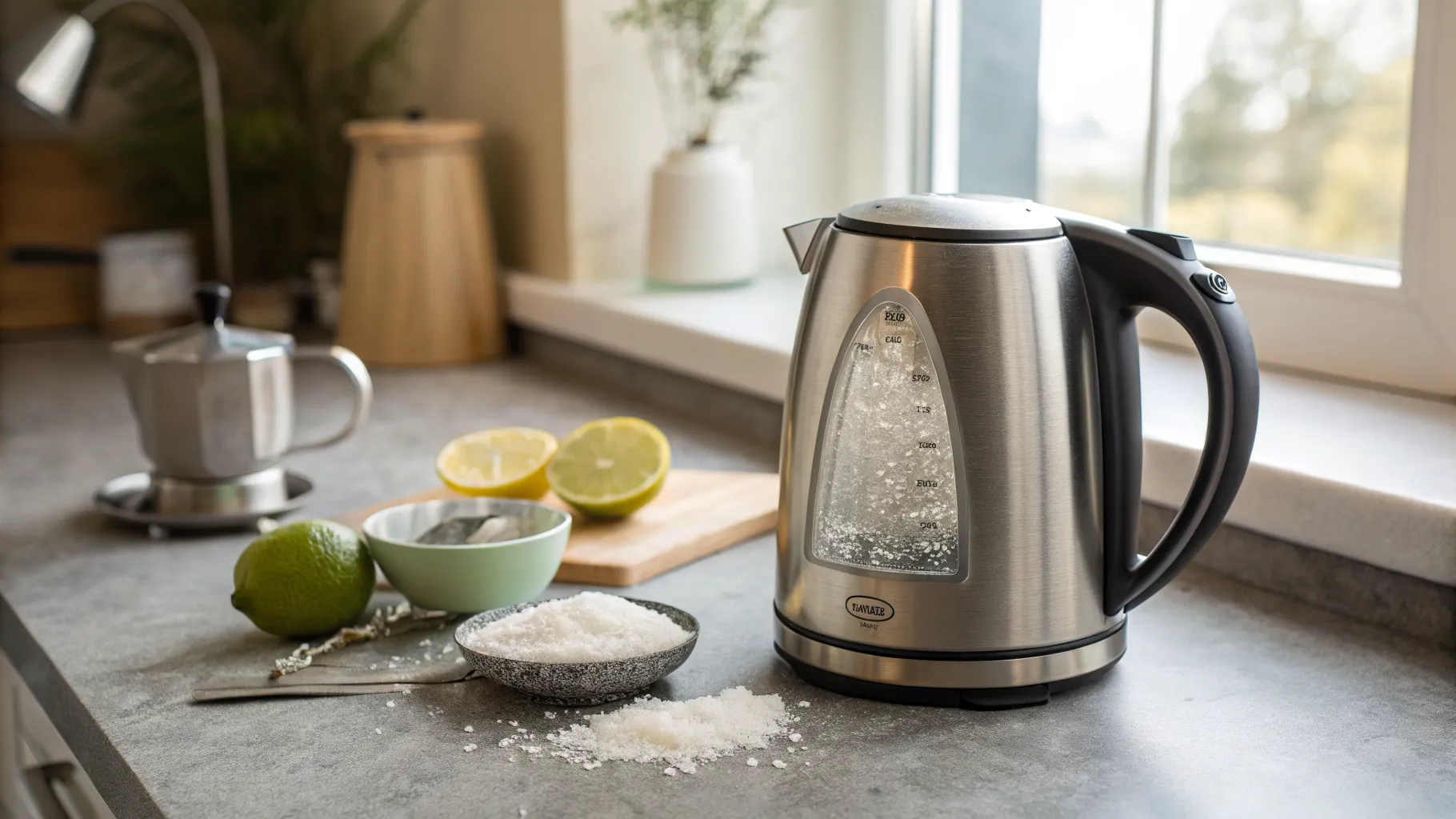
Kettles, irons and coffee machines need a descaler, not a surface spray. Oust All-Purpose Descaler comes in pre-measured, lactic-acid sachets that dissolve mineral build-up quickly, often within about ten minutes, and the single-dose format takes the guesswork out of dosing. It is the easy choice for a quick kettle descale. Check the current price on Amazon. Our how to descale a kettle and dishwasher limescale guides cover the method.
Best strong concentrate: Kilrock Mega-K
Kilrock Mega-K is one of the stronger household descalers you can buy, using a formic-acid formula that shifts stubborn deposits on kettles, coffee machines, shower heads and toilet bowls. Because it is a concentrate, one bottle stretches across many treatments, which keeps the cost per use down, and it is biodegradable and phosphate-free. A good all-rounder if you want one strong product for several jobs. Check the current price on Amazon.
Best eco option: Ecozone
If you would rather avoid the harshest chemistry, Ecozone uses plant-based acids and still removes limescale effectively. It is a sensible pick for households that want a greener cupboard without dropping to zero cleaning power. Check the current price on Amazon.
The cheap DIY options
You do not always need a branded product. Two kitchen-cupboard staples work well on light limescale:
- White vinegar (acetic acid) is excellent for kettles, shower heads and taps. Soak or wipe, leave, then rinse. Cheap and effective, though the smell is strong.
- Citric acid (sold as a powder) is odourless, food-safe and great for kettles and coffee machines. Dissolve in warm water, run it through, and rinse.
These are ideal for regular maintenance. Reserve the stronger branded products for build-up that vinegar and citric acid cannot shift.
Two safety rules
First, never mix limescale removers (which are acidic) with bleach, as the combination can release dangerous fumes. Second, check the surface is suitable: acids can damage natural stone, some enamels, chrome finishes if left too long, and certain plastics. Always test a small area, follow the timing on the label, and rinse well. The manufacturer’s own guidance, for example on the HG site, is worth reading for material warnings.
The bottom line
Keep a surface spray (Viakal) for taps and showers, an appliance descaler (Oust sachets or Kilrock) for kettles and coffee machines, and a bottle of white vinegar or citric acid for cheap routine upkeep. That trio covers almost every limescale job in a hard-water home. If you are tired of fighting limescale at all, the long-term fix is treating the water itself; see our guide on how a water softener works.
Frequently asked questions
What is the best limescale remover in the UK? There is no single best; it depends on the job. Viakal is best for taps and shower screens, Oust sachets or Kilrock Mega-K for kettles and appliances, HG Professional for heavy-duty bathroom descaling, and Ecozone for an eco option. White vinegar and citric acid handle cheap routine cleaning.
What removes limescale fast? Acidic products work fastest. A spray like Viakal clears surface limescale in minutes, and appliance descalers such as Oust dissolve kettle build-up in around ten minutes. White vinegar and citric acid are slower but effective if left to soak.
Is vinegar or a limescale remover better? Both work. White vinegar and citric acid are cheap and fine for light, regular limescale on kettles, taps and shower heads. Branded removers are stronger and better for heavy, baked-on deposits and for surfaces where you want a faster result with less scrubbing.
Can you use limescale remover on a kettle? Use an appliance descaler such as Oust or Kilrock, or a kitchen-cupboard option like white vinegar or citric acid, not a surface spray. Descale, boil and discard a couple of times, then rinse well before use.
Is limescale remover safe on chrome and enamel? Used correctly, yes, but do not leave acidic products on chrome, enamel or natural stone longer than the label states, as they can dull or damage the finish. Test a small area first and rinse thoroughly.
Why do I keep getting limescale back? Because your water is hard, so limescale returns as fast as you remove it. Regular light cleaning keeps it manageable, but the only way to stop it forming is to soften the water at source with a water softener.