Limescale & Hard Water
Does Boiling Water Remove Limescale? What Actually Happens
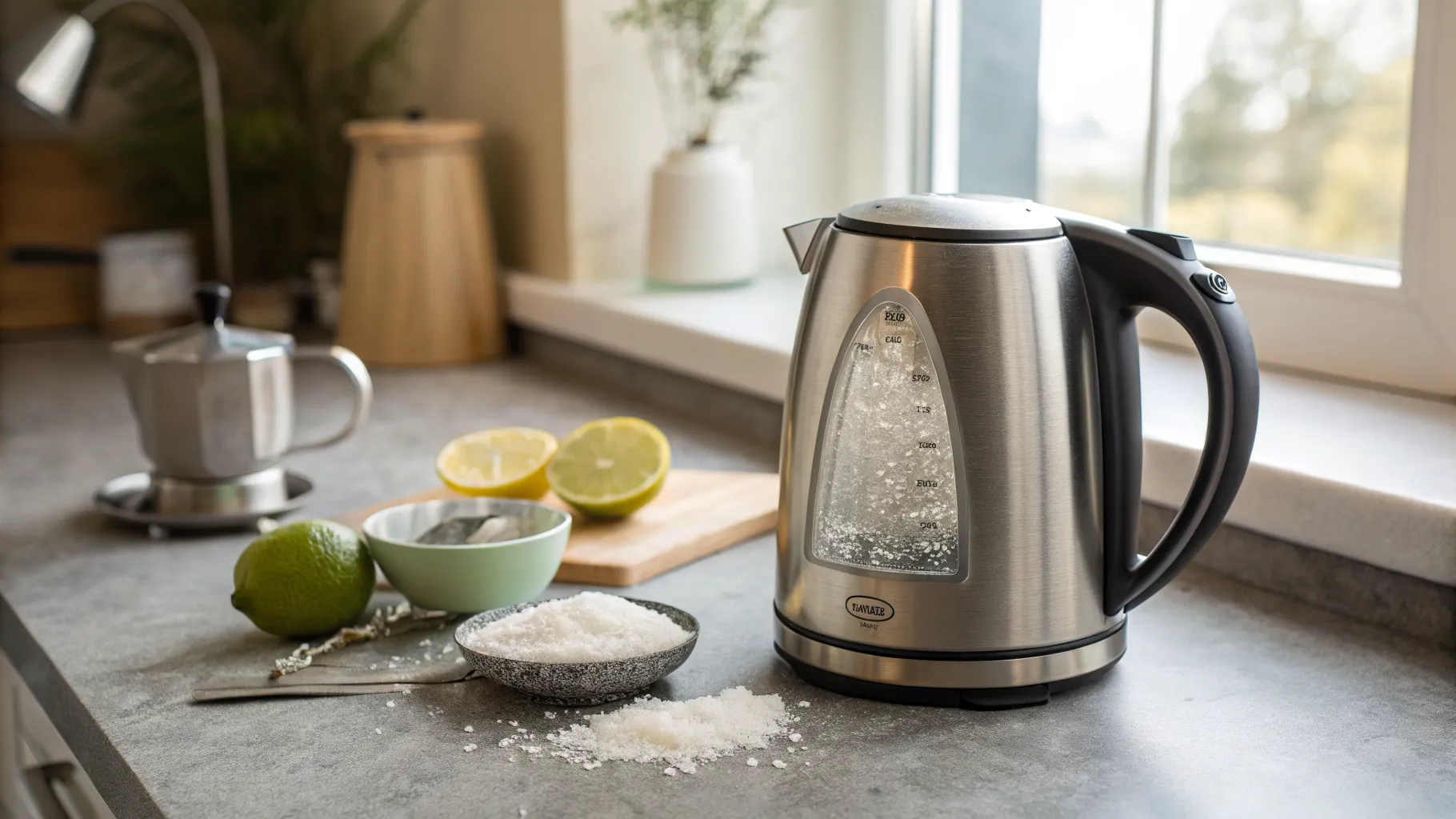
Does boiling water remove limescale? No. It does close to the opposite: boiling is the process that creates limescale in the first place. Every chalky white deposit in your kettle got there because the water was heated, and boiling that same kettle again will add more, not take any away.
There is a real answer hiding behind the confusion, though, because boiling genuinely does remove something. It removes hardness from the water, and it does that by dumping it onto your kettle as scale. Understanding that swap is the difference between treating your water and just relocating the problem.
The short answer
Three separate things get tangled together in this question:
- Does boiling remove limescale that is already there? No. Boiling water does not dissolve existing scale. Descaling with an acid does.
- Does boiling remove hardness from the water? Partly, yes. It removes what chemists call temporary hardness, which is precisely why the scale appears.
- Does boiling soften water properly? No. It cannot touch permanent hardness at all.
The chemistry, briefly
Hard water in the UK is mostly rain that has run through chalk or limestone and dissolved calcium and magnesium on the way. In the ground, calcium carbonate meets slightly acidic rainwater and becomes calcium bicarbonate, which is soluble, so it travels invisibly in your water.
Heat reverses that. When you boil the kettle, calcium bicarbonate decomposes back into calcium carbonate, which is not soluble, plus carbon dioxide and water:
Ca(HCO₃)₂ → CaCO₃ + CO₂ + H₂O
That calcium carbonate has nowhere to go but out of solution. It settles on the nearest hot surface, which is your element and the bottom of your kettle. The Drinking Water Inspectorate puts it plainly: temporary hardness is calcium and magnesium carbonates and bicarbonates, and it “can be removed from the water by boiling, forming scale”.
Read that last phrase carefully. Removed from the water, forming scale. The hardness has not left your house. It has moved from the water into your appliance.
This is also why the hottest surface scales first. Heating elements, immersion heaters and boilers cop the worst of it, because the reaction runs fastest where the temperature is highest.
Temporary versus permanent hardness
Boiling only works on half the problem, and this is the part most explanations skip.
Temporary hardness is the carbonate and bicarbonate fraction. Boiling drives it out as scale, so the water left in the kettle is genuinely softer than the water you poured in.
Permanent hardness is calcium sulphate and similar compounds. These do not decompose when heated. They stay dissolved no matter how long you boil, and they leave with the water when you pour it. Boiling has no effect on them whatsoever.
So a kettle of boiled hard water is softer than it was, but it is not soft, and how much softer depends entirely on the ratio of temporary to permanent hardness in your local supply. In much of southern and eastern England, where the water has come through chalk, temporary hardness dominates, which is exactly why kettles in London fur up so aggressively.
The DWI measures hardness in mg/l of calcium carbonate, running from soft at up to 100 mg/l to very hard above 300 mg/l. If you want to know where you stand, our UK water hardness map shows the hardest and softest areas.
So why does the myth persist?
Two reasons, and both contain a grain of truth.
The first is the school chemistry lesson. “Temporary hardness can be removed by boiling” is a true statement that appears in every GCSE syllabus, and it gets remembered as “boiling fixes hard water”. It does, for the water. It does it by ruining your kettle.
The second is that boiled water genuinely behaves differently. Tea made with boiled hard water is not the same as tea made with unboiled hard water, because some of the calcium really has come out. That scum on the surface of your tea is the same calcium carbonate, precipitated and floating rather than stuck to the element. People notice the difference and conclude that boiling has softened the water. It has, slightly, and the price was scale.
What actually removes limescale
Since heat creates it, the answer is chemistry, not temperature: acid dissolves calcium carbonate. That is the entire basis of descaling.
- Citric acid is the most effective option for a kettle, cheap and nearly odourless.
- White vinegar (acetic acid) works and is in most kitchens, but the smell lingers and it is harsher on some seals.
- Proprietary descalers are usually citric or sulphamic acid in a sachet with a brand name attached.
The method matters more than the product. Our how to descale a kettle in a hard water area guide walks through it, and we compare the products in best limescale remover. For the fittings that suffer next, see removing limescale from taps and from a shower head.
The only thing that stops it coming back is treating the water before it gets hot, which means a softener. That is a different scale of decision, covered in our best water softeners round-up and water softener versus water filter comparison. Worth knowing: a softener stops new scale, it does not strip out what has already formed, as we explain in does a water softener remove existing limescale.
Is drinking boiled hard water bad for you?
No. The DWI notes that UK drinking water regulations do not specify standards for hardness, calcium or magnesium, and there is some limited evidence linking water hardness to cardiovascular benefit, possibly through calcium and magnesium. Limescale in your kettle is unappetising, not dangerous.
The health caveat runs the other way, and it surprises people. It concerns artificially softened water, which exchanges calcium for sodium. The DWI flags this for premature babies and anyone on a low-sodium diet, and it recommends that water companies softening supplies should keep total hardness at a minimum of 150 mg/l. This is why a properly installed domestic softener leaves the kitchen tap unsoftened for drinking and cooking.
The takeaway
Boiling does not remove limescale. It manufactures it, by converting dissolved calcium bicarbonate into solid calcium carbonate on the hottest surface available. It does remove temporary hardness from the water itself, which is a real effect and useless as a treatment, since the hardness ends up in your kettle instead of your cup. It does nothing at all to permanent hardness.
To remove scale, use an acid. To prevent it, treat the water before you heat it.
Frequently asked questions
Does boiling water remove limescale? No. Boiling causes limescale rather than removing it. Heat decomposes dissolved calcium bicarbonate into insoluble calcium carbonate, which deposits on the kettle element. Existing scale is unaffected by boiling and needs an acid such as citric acid to dissolve it.
Does boiling water soften it? Partially. Boiling removes temporary hardness, the carbonate and bicarbonate fraction, by precipitating it as scale. It has no effect on permanent hardness from calcium sulphate, so boiled hard water is softer than it was but not soft.
Why does my kettle get limescale if boiling removes hardness? Because those are the same event. The hardness leaves the water precisely by becoming the scale in your kettle. Removing it from the water and depositing it on the element are two descriptions of one reaction.
Is limescale in my kettle harmful? No. UK drinking water regulations set no standard for hardness, calcium or magnesium, and there is limited evidence that hard water may carry a cardiovascular benefit. Scale is a cosmetic and efficiency problem, not a health one.
What is the difference between temporary and permanent hardness? Temporary hardness comes from calcium and magnesium carbonates and bicarbonates and is removed by boiling, forming scale. Permanent hardness comes from calcium sulphate and similar compounds that do not decompose with heat and stay dissolved.
What actually removes limescale? Acid. Citric acid is the most effective and least smelly option for a kettle, with white vinegar a workable alternative. To stop scale forming at all you need to treat the water before it is heated, which means a water softener rather than any boiling or descaling routine.